Japanese Food Beyond Sushi and Ramen: What to Try

Updated: 1 day ago
Short answer: Keep sushi and ramen on your list—but leave room for crisp tempura, charcoal-grilled skewers, comforting rice bowls, delicate soba and a hot griddle shared with friends.
You do not need to become a food expert. Choose your next meal by the texture, appetite and experience you want, then use the Japanese names below to find a suitable restaurant.
Japanese food is not one style. Everyday set lunches, regional specialties and yoshoku—Japanese-style Western food—belong in the picture too.
Here is a practical starting menu, not a ranking or a complete catalogue.

Teishoku example, photographed in 2019 by Betsylavolette, CC BY-SA 4.0. Converted to WebP; this image retains that license. Reference photograph, not a FIRST FILM JOURNEYS customer meal.
Start with a teishoku: a complete meal on one tray
Teishoku (定食) means a set meal, not one particular recipe. Expect a main dish with rice, soup and accompaniments; the exact combination depends on the restaurant.
It is a useful starting point when you want a proper lunch without assembling several separate orders. A grilled-fish set, pork-cutlet set and fried-chicken set can feel like completely different meals even though all three are teishoku.
Before ordering, check what the pictured set actually includes. Extra rice, drinks and substitutions are not automatically free. JNTO's dining guide explains the set-meal format alongside other Japanese dining styles.
A different noodle mood: soba and udon
Soba (そば): thin buckwheat noodles, often served chilled with dipping sauce or hot in broth.
Choose cold zaru soba if you want to notice the noodles' aroma and texture rather than another rich soup. Do not pour all the dipping sauce over the noodles unless the dish's instructions call for it.
Udon (うどん): wheat noodles with a thicker, often chewy bite.
Hot broth, chilled noodles and curry udon offer very different experiences. Kitsune udon commonly comes with seasoned fried tofu; tempura udon adds battered ingredients.
Hot or cold is a choice, not a quality ranking. Check the actual toppings before ordering, and remember that noodles with tofu or vegetables can still have fish-based broth. JNTO's dish introduction covers both noodle families.

Kyoto-style kitsune udon, 2022. Kykk wiki, CC0; converted to WebP. A regional example, not a current Tokyo menu or a guarantee of vegetarian broth.
When you want crispness or a smoky grill
Tempura (天ぷら): seafood or vegetables in a light batter. It is different from a breadcrumb-coated cutlet.
Try a mixed plate for contrasting textures, or a tendon (天丼), with tempura served over rice. A counter meal and a casual rice bowl need different amounts of time and planning.
Tonkatsu (とんかつ): a breaded pork cutlet, often paired with shredded cabbage. Look for rosu (ロース, loin) or hire (ヒレ, tenderloin) when a menu offers a choice.
A set meal keeps rice and cutlet separate; katsudon combines the cutlet with a rice-bowl preparation. Do not confuse tonkatsu with tonkotsu, pork-bone ramen broth.
Yakitori (焼き鳥): grilled chicken skewers. The menu may offer several cuts, so “chicken” does not always mean breast meat.
Shio means salt seasoning; tare is a sauce-based option. Check whether the price is for one skewer, a pair or a course before multiplying your order. JNTO's yakitori guide is a useful introduction.
Rice comfort: donburi, curry and omurice
Donburi (丼): a family of rice bowls, not a single topping. Gyudon (牛丼) is a beef bowl; oyakodon (親子丼) combines chicken and egg; tendon features tempura.
If you want a cooked meal, read the topping rather than assuming every “don” is raw fish. See JNTO's donburi guide for the variety.
Japanese curry rice (カレーライス): rice with curry sauce, often a thick, comforting style. Spice levels, meat and toppings vary.
Katsu curry adds a cutlet, so it can be a substantial meal. “Vegetable curry” does not by itself establish what is in the sauce.
Omurice (オムライス): seasoned rice paired with an omelette, with ketchup, demi-glace or another sauce depending on the kitchen.
Not every version is the soft omelette opened dramatically in social-media videos. It is part of the yoshoku tradition, not an inauthentic detour from Japanese food.

Omurice with demi-glace sauce, 2017. Ocdp, CC0; resized and converted to WebP. Reference photograph; presentation varies by restaurant.
Make dinner an experience: griddles and hot pots
Okonomiyaki (お好み焼き): a savory griddle dish built around batter, cabbage and additional ingredients.
Regional versions are not interchangeable: MAFF's Hiroshima guide describes a layered preparation including noodles. Ask which style the restaurant serves rather than expecting one universal pancake.
Monjayaki (もんじゃ焼き): a Tokyo griddle specialty with a much looser batter. Its soft consistency is part of the dish, not a failed okonomiyaki.
Tsukishima Monja Street is a useful area to research. Check whether staff cook it or show you how; do not assume every table is self-service.
Nabe (鍋): a family of hot-pot meals. Chanko-nabe, shabu-shabu and sukiyaki have different ingredients and eating rhythms.
For a shared dinner, check the minimum order, whether pricing is per person, and the restaurant's cooking instructions. GO TOKYO's local-food guide introduces chanko and other Tokyo specialties.
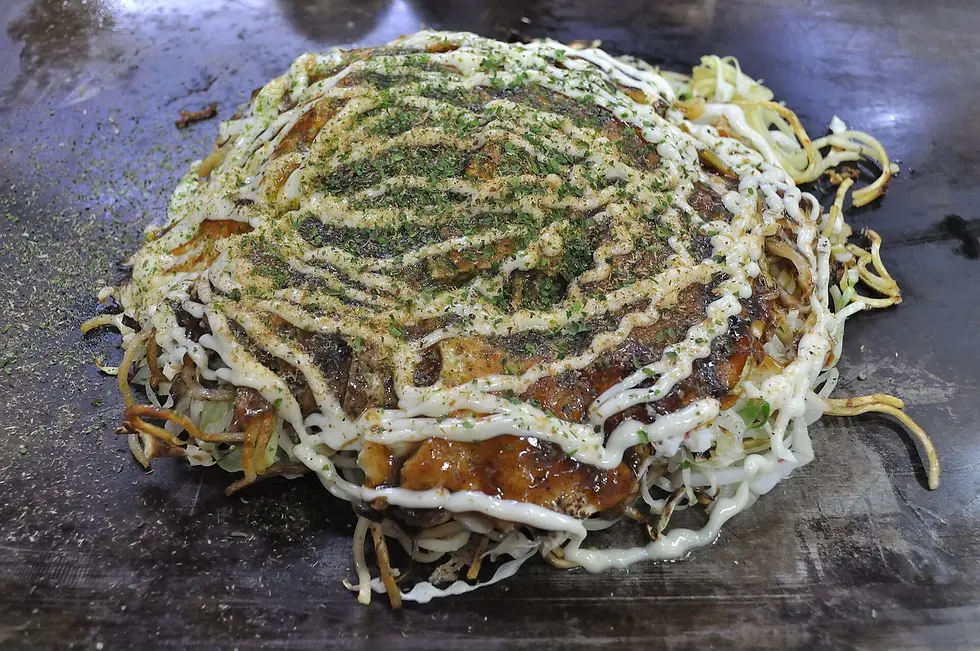
Osaka modanyaki—an okonomiyaki variation with noodles—photographed in 2022. Ocdp, CC0; resized and converted to WebP. This is not monjayaki or a universal okonomiyaki recipe.
Five dishes I recommend trying
Alongside the everyday options above, these are five dishes I personally recommend. Choose by the texture and style you enjoy; you do not need to fit all five into one trip.
My aim is to help visitors discover Japan through everyday life as well as famous sights. That is why I want to introduce Japanese food beyond sushi and ramen.
My ideal introduction to Tokyo would begin with a view from TOKYO SKYTREE, followed by a meal, then visits to a supermarket, a greengrocer and a department store. I want visitors to experience part of daily life and notice cultural differences for themselves.
I hope the tastes, smells and small details become memories you can recall after returning home. For me, discovering Japan also means creating opportunities for people here to learn what is wonderful about our visitors’ home countries.
Buta no kakuni: braised pork belly
豚の角煮 — buta no kakuni is pork belly slowly simmered until tender, usually in a sweet-savory soy-based sauce. Its richness and soft layers of meat and fat make it a satisfying choice with plain rice.

Choose this when you want something comforting rather than crisp. It is a fatty cut, so a small shared plate can be a useful first taste. Eggs or daikon may accompany it, depending on the recipe.
Kinmedai no nitsuke: simmered splendid alfonsino
金目鯛の煮付け — kinmedai no nitsuke features splendid alfonsino simmered in a sweet-savory sauce, commonly made with soy sauce, sake and sugar. The appeal is tender, flaky fish with a deeply flavored sauce; it is associated with Shizuoka’s Izu Peninsula.

Check whether the order is a fillet or a whole fish and whether rice is included. Do not assume it is boneless, especially around the head and fins. A whole fish may suit sharing better than a quick solo lunch.
Ebi mayo: shrimp in a creamy mayonnaise sauce
エビマヨ — ebi mayo typically combines fried shrimp or prawns with a creamy, slightly sweet and tangy mayonnaise-based sauce. It belongs to the Japanese-style Chinese side of the dining scene, showing how widely eating in Japan extends beyond traditional washoku.

Choose it for the contrast between springy shrimp and a rich sauce. It works well as a shared dish alongside simpler vegetables or rice. Recipes and ingredients vary, so confirm the actual preparation if you have dietary requirements.
Anago: conger eel, with more than one preparation
穴子 — anago means conger eel, which is different from unagi. Try softly simmered anago for a delicate texture, or anago tempura when you want a crisp coating. It can also appear over rice as a bowl meal.
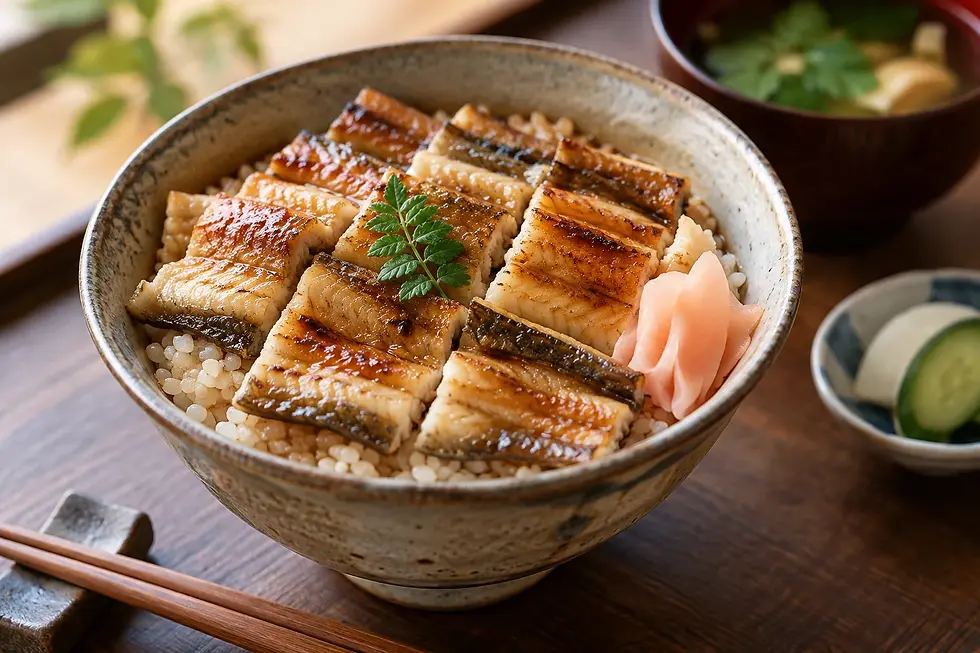
The name identifies the ingredient, not a single cooking method. Check the preparation before ordering: simmered, grilled and tempura versions provide very different experiences. You can enjoy anago without choosing a sushi meal.
Kani: crab prepared the way you enjoy
蟹 — kani is crab. Boiled crab highlights the meat’s gentle sweetness, grilled legs add roasted flavor, and a crab hot pot makes the meal a slower, shared experience. Species and serving styles differ between restaurants.

Before ordering, ask which crab is served, whether the price covers one portion or a whole crab, and whether the meat comes in the shell. This helps you choose for your appetite, budget and time rather than judging only by a menu photograph.
Dish-description references: Kikkoman on kakuni, MAFF on simmered kinmedai, Josai University’s ebi mayo recipe, MAFF on anago and JNTO on Hokkaido seafood. Personal recommendations are from Masataka Kawakubo; these sources support the food descriptions.
Build variety into three days, not a checklist race
Try this flexible pattern:
One everyday meal: a teishoku lunch with a main ingredient you enjoy.
One contrasting texture: cold soba after a rich dinner, or tempura instead of another noodle bowl.
One Japanese comfort meal: curry, omurice or a cooked donburi.
One slower, shared experience: a griddle dish or hot pot when you have time to understand the service.
These are four meal slots spread across a trip, not a required eating schedule.
Keep room for sushi, ramen, a favorite repeat or something seasonal on the actual menu. Enjoying fewer meals properly beats collecting names while rushing between queues.
Want to browse several dishes in one stop? Our Tokyo depachika food-hall guide explains what to buy, where you may eat it, and how to check portions and carrying instructions before paying.
A quick konbini meal: decide before checkout
A convenience-store meal can be useful between activities, but it offers a different experience from a freshly served teishoku, a soba counter or a shared hot pot. Choose it for the needs of that particular stop.
Before paying, decide whether you need a bag, warming and utensils. Both 7-Eleven's visitor guide and FamilyMart's communication sheet cover these practical requests. Wording and equipment vary; you do not need to memorize a checkout script.
Bag: ask “Fukuro o kudasai” (袋をください, a bag, please), or say “Fukuro wa irimasen” (袋はいりません, no bag, thank you). A shopping bag may cost extra; check the displayed yen price before choosing one.
Warming: “Atatamete kudasai” (温めてください) means please heat it. Point to the item you mean. Do not assume that every product can be heated or that every branch has the same microwave arrangement.
Utensils: ask for what you will actually need before leaving. “Ohashi o kudasai” (お箸をください) asks for chopsticks. If you need a fork instead, ask rather than assuming the packaged meal includes one.
Do not promise yourself that every utensil is free. FamilyMart's November 2024 report describes paid plastic utensils at selected directly operated stores—not a charge at every branch. Follow the current store's notice.
Where to eat: some stores have an eat-in area; others do not. Tell staff before paying if you intend to use one, because the applicable food tax treatment can differ. Follow its hours, seating and waste-sorting rules.
Before a morning activity, choose something you have time to buy and eat without rushing to the meeting point. For the payment side, use our cash-and-card backup guide rather than assuming one method works everywhere.
Find a suitable restaurant and order with confidence
Search the dish name plus the neighborhood where you will actually be: “そば Asakusa” or “オムライス Ginza,” for example. These are search templates, not endorsements of a specific restaurant.
Before setting off, check the restaurant's own current menu, opening days, last-order time, reservation rules and payment options.
For yakitori or shared dishes, also check seating charges and ordering requirements. Our izakaya ordering guide and last-order guide explain the practical details.
For dietary requirements, ask about the whole preparation: broth, sauces, toppings and shared equipment—not only the visible main ingredient.
A menu photo or translation app cannot confirm allergy safety. JNTO's vegetarian and vegan guide explains why fish stock can be easy to miss.
Contact the restaurant before booking if its answer will determine whether you can eat there.
FAQ
Is Japanese food mostly raw fish?
No. Grilled skewers, pork cutlets, hot noodles, curry, omelette rice and hot pots offer many cooked options. Confirm the preparation of your actual order rather than relying on a broad cuisine label.
Are the dishes in this guide vegetarian?
Not automatically. Even vegetable toppings can sit in fish stock or accompany animal-based sauces. Choose a restaurant that can clearly explain ingredients and preparation for your needs.
Can I combine a meal with a Tokyo photo experience?
Plan the meal before or after your session rather than assuming restaurant time is included. Explore our Tokyo photo experiences and tell us your dates and neighborhood plans.
Restaurant bookings, dining and permission to photograph inside venues are not promised by this article.
Food-description sources checked: 9 October 2026. The linked JNTO, GO TOKYO and MAFF pages support those descriptions.
Konbini-checkout sources checked: 15 October 2026. Retailer policies vary by store; follow the current signs and staff instructions.
Meal-selection suggestions are editorial guidance, not claims of personal restaurant visits. The four reference photographs are historical dish examples. The five recommended-dish visuals are illustrative examples; neither represents a current menu or customer testimonial.


Comments